When I heard on the weather forecast that Friday was supposed to be a nice, sunny day, I rearranged my work schedule to have the day off. My plan was to wake up early and head out for a morning of birding in Fillmore County and hopefully check some warblers and other spring migrants off my list. It was a beautiful morning and since I had no schedule, I was able to stop and enjoy some non-bird sights during my journey.
Mammals always provide good photo opportunities because they don't move nearly as fast and are much larger and easier to capture with a camera than birds. I had to stop the car and turn around when I spotted these longhorn cattle in a small pasture. Cool, aren't they? Scroll down for closer looks.....  What a beautiful animal. They're a little different than most of the cattle I see around here because they weren't the least bit curious about me and never approached the fence like most cattle would. Good thing my camera zooms!
 What a beautiful animal. They're a little different than most of the cattle I see around here because they weren't the least bit curious about me and never approached the fence like most cattle would. Good thing my camera zooms!
  I thought this one was so pretty -- looks like maybe a cross with White Park cattle (I'm basing that assumption on the black ears and nose). I noticed its left horn had some fuzzy stuff stuck on the end.....wonder if they use their horns to scratch their back and this was some fur??
In the field right across from the longhorns, there were some horses. It was a little chilly this morning, so you can see the steam from this horse's breath.

These horses came right up to the fence for me to pet and get a closer look at. I really like the way horses smell, don't you?

Here's another cute little mammal -- the red squirrel. It's not very often they sit still long enough for a photo, so I felt particularly lucky to get this picture.

Down at Mystery Cave State Park, this little bat (I think it's an Eastern Pipistrelle) was sleeping in a high corner outside of the visitor's center.

There were lots of spring wildflowers blooming at Forestville State Park. Flowers and plants are also much easier to photograph than birds, so I took advantage of that.
Wild Blue Phlox

Wood Anemone (Mayflower)

Wild Ginger

Virginia Bluebells

Jack-in-the-Pulpit
 (I loved the way this picture turned out - backlit with the sun!)
And now finally, I've gotten to the birds! It was an amazing morning, filled with all kinds of birds and their beautiful songs. Thankfully, I remembered to bring my BirdJam and field guides along, and was able to identify almost every bird that I saw and heard. I spent most of the morning at Forestville State Park under the canopy of deciduous forest and along the river. It was a most perfect day for birding!
Eastern Meadowlark on a fencepost

Song Sparrow preens his feathers after taking a bath

And then interrupts his preening to sing a pretty song!

Blue-Gray Gnatcatcher

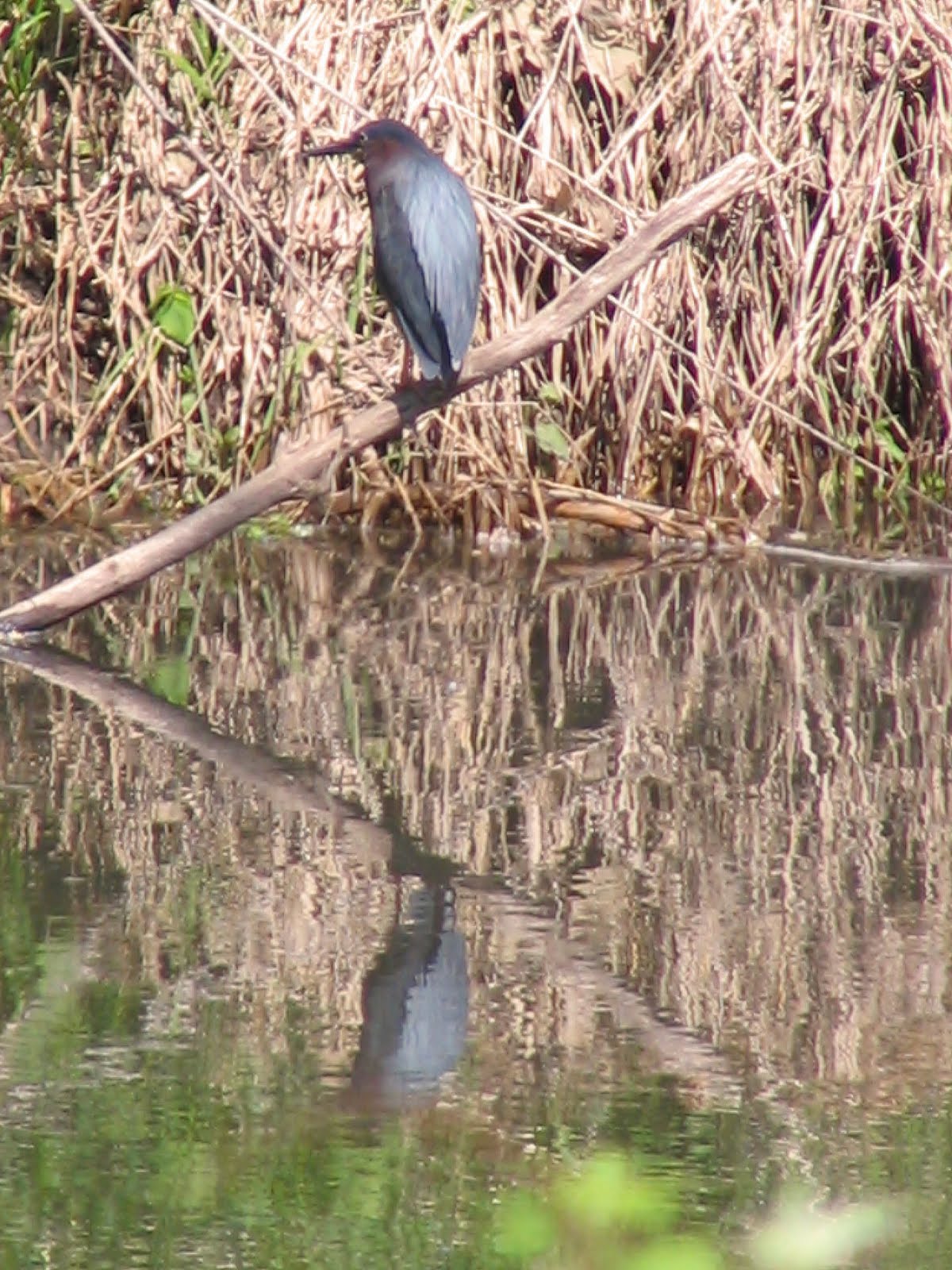
Green Heron (and reflection!)
I love their crazy yellow feet!

Here's a listing of the birds I saw this morning in Fillmore County -- a total of 60! I was pretty happy with this total for my 5-hour birding adventure.

Hope you get a chance to enjoy some good birding adventures this weekend too!


 A juvenile Green Heron! WOW!! Lifer!! It was way over on the other side of the pond so this isn't the best picture, but based on the size of the bird (as big as a crow), I'm checking Green Heron off my list.


